

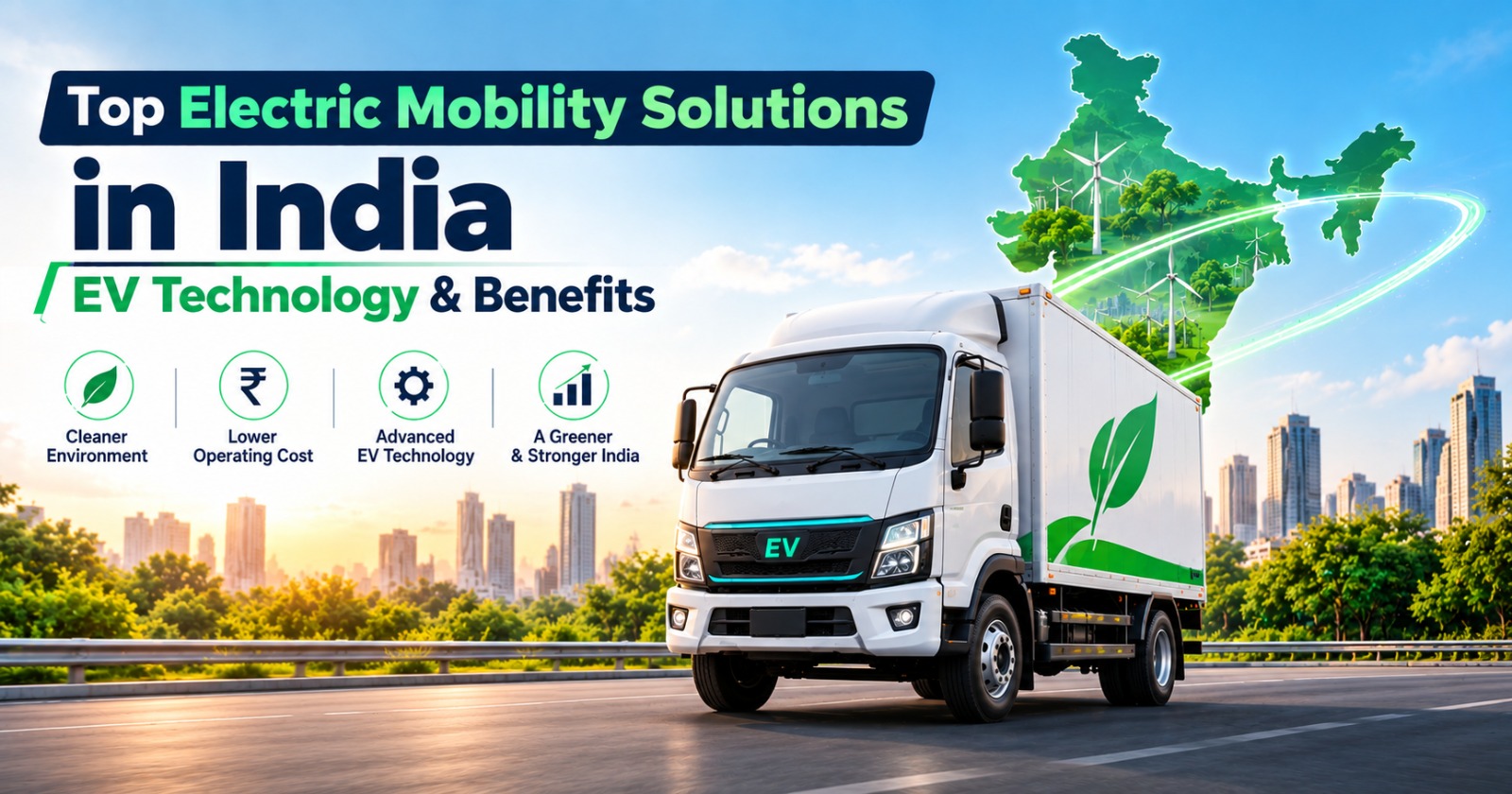
India is undergoing a massive transformation in how people and goods move. The shift from petrol and diesel vehicles to electric power is no longer a distant dream—it is happening right now. Electric mobility solutions are reshaping Indian roads, reducing pollution, and creating new opportunities across industries.
The numbers tell a compelling story. Electric vehicle penetration in India reached a record 10.7% in May 2026, with EV sales surging 45% year-on-year. The electric passenger vehicle market grew by an impressive 57% in the first quarter of 2026 alone. More importantly, EVs have crossed the 5% threshold in India's passenger vehicle market—a figure widely seen as the tipping point for mass-market adoption.
This growth is being driven by several factors: rising fuel prices, government incentives, improving battery technology, and a growing awareness of environmental benefits. Learn about GPP India's commitment to green and sustainable solutions . As more Indians experience the advantages of electric vehicles, the transition is accelerating faster than many expected.
In this comprehensive guide, we will explore the top electric mobility solutions in India, the technology powering this revolution, the benefits of going electric, and how companies like GPP India are contributing to this transformative journey.
Electric mobility solutions encompass the entire ecosystem of products, services, and infrastructure that enable the adoption and use of electric vehicles. This goes far beyond just the vehicles themselves. A complete electric mobility solution includes:
As a trusted Electric Mobility Solutions Provider, companies like GPP India are playing a vital role in supplying precision components that make electric vehicles reliable, safe, and efficient. Explore GPP's range of precision components .
India's electric vehicle market is expanding at an unprecedented pace. In fiscal year 2026, the EV market crossed an estimated 2.5 to 2.7 million unit sales across all segments. Electric two-wheelers and three-wheelers make up the bulk of these purchases, with electric cars gaining significant ground.
Electric passenger vehicle sales are projected to more than double to around 5 lakh units by the next fiscal year. This growth is being supported by an expanding portfolio of electric models, with the number of available electric car models doubling to around 20 over the past two fiscal years.
The Indian government has been a strong advocate for electric mobility. The PM E-DRIVE Scheme, with a total outlay of 10,900 crore, is promoting electric mobility and supporting EV ecosystem development across multiple segments. Under this scheme, over 22 lakh EVs have already been sold, including 19.19 lakh electric two-wheelers and 2.93 lakh electric three-wheelers.
The government is also working on developing electric and electronically enabled highways that will integrate charging infrastructure, intelligent digital systems, and emergency response mechanisms. This forward-looking approach is creating a robust foundation for sustainable mobility.
Charging infrastructure is expanding rapidly across India. Public charging stations have grown from 2,000 to over 10,000 in the last three years. The PM E-DRIVE Scheme has allocated 2,000 crore specifically for setting up public charging infrastructure.
However, challenges remain. Charging infrastructure is still concentrated in urban areas, and uneven distribution continues to be a barrier to widespread adoption. Companies and government agencies are working together to address this gap.
Electric vehicles in India are becoming increasingly connected and intelligent. The connected EV segment exploded by 67% year-on-year in Q1 2026, establishing the car as India's second most important smart device after smartphones.
Features like over-the-air (OTA) updates and remote diagnostics have become purchase prerequisites rather than luxury add-ons. Digital cluster adoption has accelerated dramatically, jumping 55% year-on-year, with penetration nearly doubling from 35% to 48%.
Battery technology is at the heart of the electric mobility revolution. India's EV battery demand is projected to rise sharply from 20 GWh in 2025 to 200 GWh by 2032—a tenfold increase.
Premium electric vehicles now offer driving ranges of 500 to 700 kilometers on a single charge, while mid-range models deliver between 300 and 450 kilometers. Longer battery warranties of eight to ten years and new ownership models like Battery-as-a-Service are helping address concerns around upfront costs and battery replacement.
In 2026, the most visible EV trend is the rapid increase in fast-charging stations. EV infrastructure in India is becoming smarter and more scalable, with fast charging networks, battery swapping, V2G systems, and renewable integration reshaping mobility across the country.
One of the most compelling benefits of electric mobility is cost savings. Electric two-wheelers can reduce fuel and energy costs by up to 70 to 80%, while lower maintenance requirements can contribute to a 15 to 20% improvement in income for delivery partners.
Rising fuel prices have further improved the cost competitiveness of electric vehicles. Running costs of internal combustion engine vehicles increased by 7 to 8% in May 2026 due to higher fuel prices, improving the relative total cost of ownership advantage of electric vehicles by around 300 basis points.
Electric mobility offers zero or ultra-low tailpipe emissions of local air pollutants and much lower noise levels. With a penetration target of 30% EVs by 2030, India has the potential to cut one billion tonnes of emissions, leading to cleaner air, quieter streets, and better energy independence.
India imports nearly 90% of its oil, making the country vulnerable to global crude price shocks. By shifting urban mobility towards electricity, India can lower fuel imports and become less exposed to global crude price volatility. This strengthens the nation's energy security and reduces the massive foreign exchange outflow spent annually on crude oil imports.
Electric vehicles have fewer moving parts compared to internal combustion engine vehicles. No engine, no exhaust, no fuel system. This translates to lower maintenance costs and fewer breakdowns, making EVs particularly attractive for commercial fleets and daily commuters.
Electric two-wheelers are the backbone of India's electric mobility revolution. They account for the majority of EV sales and are particularly popular among daily commuters and delivery partners. Companies like Flipkart have launched initiatives like EV Assist to make electric mobility more accessible for delivery partners, helping them overcome barriers related to affordability, vehicle ownership, and fragmented access to rental options.
Electric three-wheelers are central to India's clean mobility transition, offering lower costs, higher efficiency, and greater suitability for dense urban traffic. They are widely used for last-mile connectivity, goods transport, and passenger movement in cities across India.
The electric passenger vehicle market in India is growing rapidly. Tata Motors has retained leadership in the EV market with a 35% share, led by the Nexon EV. Mahindra has emerged as one of the fastest-growing EV players, recording 92% year-on-year growth. New entrants like VinFast are also expanding their presence in the Indian market.
Electric buses are already operating in many Indian cities, with plans for significant expansion. Electric trucks are just beginning to emerge, with companies like Tata and Ashok Leyland developing electric commercial vehicles.
Agriculture is another sector benefiting from electric mobility technology. Agri-drones are transforming how Indian farmers monitor crops, apply fertilizers, and manage their fields.
Agri – Drone Manufacturer India companies are developing specialized drones for agricultural applications. These drones offer precision spraying, crop monitoring, and data collection capabilities that help farmers increase yields while reducing chemical usage.
Garuda Aerospace has established itself as India's largest drone company, having manufactured over 3,000 drones and trained more than 2,500 drone pilots. Scandron has received DGCA certification for its agricultural drone model designed for fertilizing and crop monitoring.
The "Make in India" initiative is also boosting the agri-drone ecosystem. Companies like EFT have partnered with Indian manufacturers to locally produce agricultural drones, strengthening the country's UAV manufacturing ecosystem.
Behind every electric vehicle is a network of precision component manufacturers that supply the parts needed to build reliable, safe, and efficient EVs. GPP India is one such company, serving as a trusted Precision Pins Supplier and Heavy Vehicle Components manufacturer. See the prestigious clients who trust GPP's precision components .
Electric vehicles may have fewer moving parts than traditional vehicles, but they still require thousands of precision components. Precision pins are used extensively in EV manufacturing:
Every EV needs hundreds of pins, making reliable Electric Mobility Solutions Provider companies essential to the industry. Explore GPP's precision shaft and pin solutions .
GPP India is ready for the EV revolution. The company makes precision pins, fasteners, and machined components that EV makers need. As a Heavy Duty U-Bolt Supplier and Automotive U-Bolt Manufacturer, GPP India also serves the electric truck segment. Discover GPP's heavy-duty U-bolt solutions .
The company is expanding its knowledge and capabilities for EV components, positioning itself as a key partner for automakers transitioning to electric mobility. Learn about GPP's advanced EV powertrain systems .
| Segment | Current Status | Growth Outlook | Key Benefits |
|---|---|---|---|
| Electric Two-Wheelers | High Volume, Market Leader | Very High Volume Growth | Low Cost, Ideal for Daily Commute, Reduced Fuel Expenses |
| Electric Three-Wheelers | High Volume, Widely Adopted | Very High Volume Growth | Efficient for Urban Transport, Lower Operating Costs |
| Electric Passenger Vehicles | Medium Volume, Rapidly Growing | High Volume Growth | Premium Features, Long Range, Lower Maintenance |
| Electric Buses | Medium Volume, Expanding | High Volume Growth | Reduced Emissions, Lower Noise Pollution |
| Electric Trucks | Early Stage | Medium Volume Growth | Lower Operating Costs, Suitable for Logistics |
| Agri-Drones | Growing Adoption | High Growth Potential | Precision Agriculture, Reduced Chemical Usage |
Despite the rapid growth, electric mobility in India faces several challenges:
The future of electric mobility in India looks bright. Industry estimates suggest EVs will make up 7 to 8% of India's passenger vehicle market by the end of 2026. Electric three-wheelers are projected to outsell non-EV variants by 2030.
Connected vehicles are projected to capture 40 to 45% of the market share. The combination of electric powertrains and connected technologies is creating vehicles that are not only cleaner but also smarter and more user-friendly.
The emergence of electric highways, with integrated charging infrastructure and intelligent digital systems, will further accelerate adoption.
For component manufacturers like GPP India, this represents a significant opportunity. As an Electric Mobility Solutions Provider, the company is well-positioned to supply the precision components that EV makers need. Contact GPP India today to discuss your component requirements .
Whether you are an individual looking to buy your first EV or a business planning to electrify your fleet, here are some factors to consider:
Electric mobility solutions include electric vehicles, charging infrastructure, battery technology, fleet management systems, and maintenance services that enable the adoption and use of electric transportation.
India's EV market is growing rapidly, with penetration reaching a record 10.7% in May 2026. Electric passenger vehicle sales are projected to double to around 5 lakh units by the next fiscal year.
Electric vehicles offer lower operating costs, reduced emissions, quieter operation, lower maintenance requirements, and reduced dependence on fossil fuels.
Agri-drones help farmers with precision spraying, crop monitoring, and data collection, enabling increased yields while reducing chemical usage.
GPP India supplies precision pins, fasteners, and machined components that electric vehicle manufacturers need. The company is expanding its capabilities for EV components. Learn more about GPP India's capabilities .
The PM E-DRIVE Scheme, with a total outlay of 10,900 crore, promotes electric mobility and supports EV ecosystem development. Over 22 lakh EVs have been sold under this scheme.
Charging infrastructure is expanding rapidly, with smart charging networks, battery swapping, and V2G systems being developed. The government is also working on electric highways with integrated charging.
Electric vehicles have higher upfront costs but lower operating costs. Fuel savings can be 70 to 80% for two-wheelers, and maintenance costs are significantly lower.
India offers electric two-wheelers, three-wheelers, passenger cars, buses, and trucks. Electric two-wheelers and three-wheelers currently dominate the market.
Businesses can transition by assessing their fleet requirements, planning for charging infrastructure, evaluating total cost of ownership, and partnering with reliable Electric Mobility Solutions Provider companies. Contact GPP India for expert guidance .
Electric mobility is no longer a futuristic concept in India—it is a present reality that is transforming how people travel and how goods move. With strong government support, improving technology, and growing consumer acceptance, the transition to electric vehicles is accelerating faster than ever.
The benefits are clear: lower operating costs, reduced emissions, quieter streets, and greater energy independence. As the ecosystem continues to develop, more Indians will experience the advantages of electric mobility.
Companies like GPP India are playing a crucial role in this transformation by supplying the precision components that make electric vehicles reliable and efficient. As an Electric Mobility Solutions Provider, GPP India is helping build the foundation for a cleaner, more sustainable transportation future. Explore GPP's full range of precision engineering solutions .
Whether you are an individual considering your first EV, a business planning to electrify your fleet, or a farmer exploring agri-drone technology, the time to embrace electric mobility is now. The revolution is here, and it is powered by innovation, determination, and a shared vision for a cleaner India.