

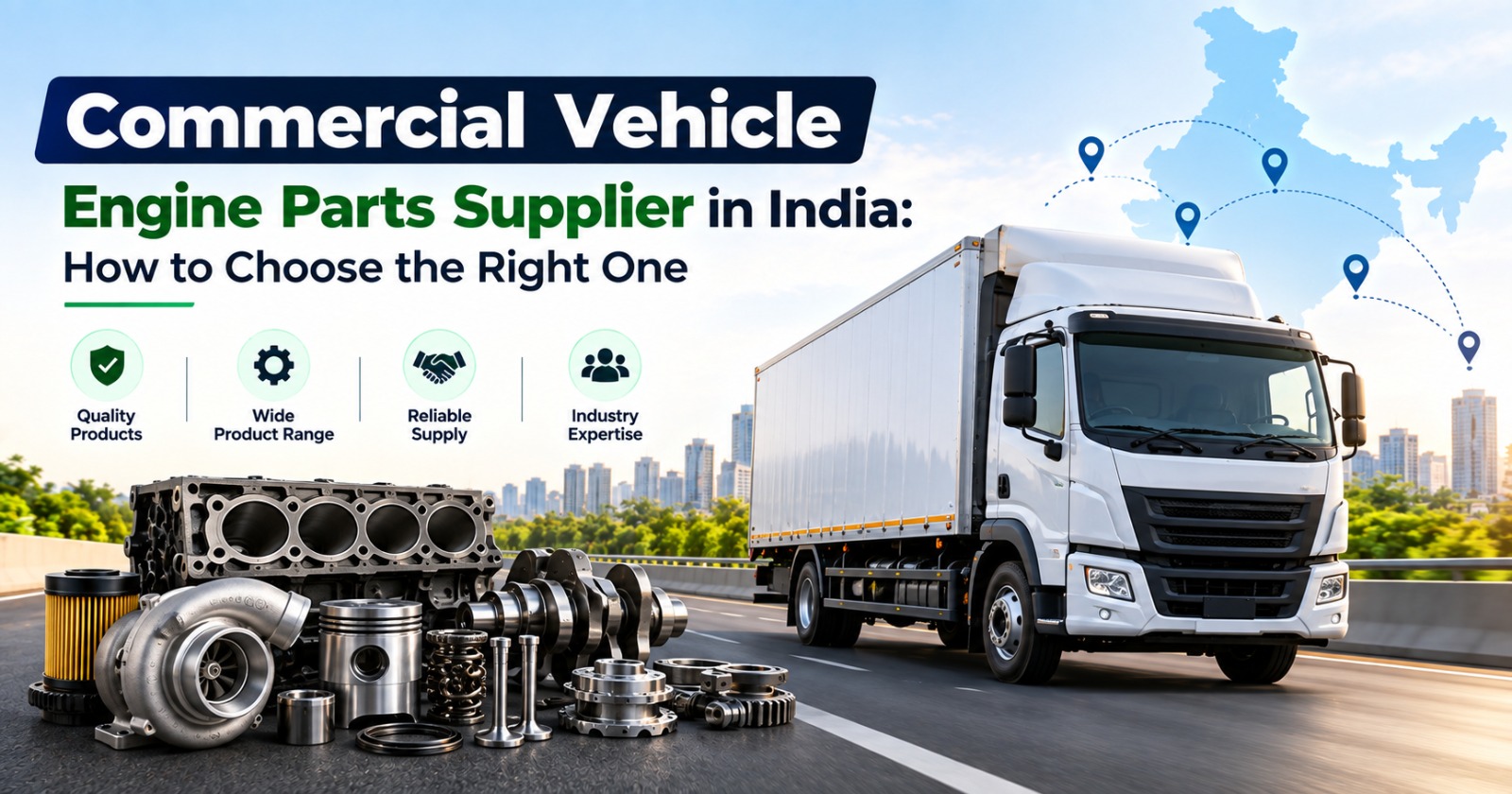
A reliable supplier of commercial vehicle engine parts can show how each component is made, checked and documented. Evaluate manufacturing capability, material control, heat treatment, inspection, traceability, the quality system, production capacity, customer approval experience and delivery planning. Ask for documents that match your drawing and specification, approve samples before volume production, and audit the plant where possible.
Commercial vehicle engine parts are the internal components of engines used in trucks, buses, tractors, construction and off-highway equipment, and gensets. These engines run long duty cycles under heat, load and vibration, so material, heat treatment and dimensional accuracy are specified closely.
Common examples include push rods, rocker shaft assemblies, valve bridges, tappets/valve lifters and injector clamps. Most valve train parts pass load from one component to the next, which is why drawing conformance matters for the whole set and not only for a single part.
Ten factors usually decide whether a supplier is suitable for a commercial engine component programme.
Use this table as an audit sheet when you compare suppliers.
| What to Check | What to Verify | Why It Matters |
|---|---|---|
| Manufacturing processes | Which of forging, machining, heat treatment and finishing are done in-house and which are outsourced | Outsourced steps need their own audit and control |
| Material certificates | Grade and specification match the drawing | A wrong material grade cannot be corrected by later processing |
| Heat-treatment records | Method, hardness and case depth where specified | Wear resistance and fatigue life depend on correct treatment |
| Dimensional inspection | Characteristics measured, gauges used, sampling plan | Confirms parts meet drawing limits |
| Traceability | Whether parts link back to material and process records | Allows containment if a nonconformance is found later |
| Quality system | Applicable standards and audit evidence | Shows how processes are controlled and reviewed |
| Production capacity | Machine and process capacity against your annual volume | Avoids supply gaps as volumes grow |
| Sample / first-article approval | Full report against the drawing before volume production | Catches drawing and process issues early |
| Quality documentation | Control plan, inspection formats, reaction plan for nonconformance | Defines what is checked and what happens when a check fails |
| Delivery planning | Packing method, dispatch schedule, communication process | Keeps your line supplied and parts protected in transit |
Requirements depend on the drawing, your customer specification and the approval process. Not every document applies to every component. Where applicable, buyers commonly request:
Agree the document list, format and frequency in writing before the first order, so that both sides know what accompanies each supply.
Ghaziabad Precision Products (GPP) was established in 1988 and operates five manufacturing facilities in Ghaziabad, Uttar Pradesh, with a combined footprint of approximately 37,500 sq. m. Its capabilities include forging, precision machining, heat treatment and finishing. The facilities page describes the equipment and processes in more detail. GPP supplies components to OEM and Tier-1 customers, and the clients page shows the sectors it serves.
Inspection scope and documentation differ from one component to another. Confirm what applies to your part during technical discussions, using the checklist above as a starting point.
Valve train components form a core part of the range:
Components are manufactured to customer drawings and applicable specifications.
For B2B buyers, location affects how practical it is to audit a supplier and plan supply. A Ghaziabad manufacturing base places GPP within the Delhi-NCR industrial region, which matters in three ways:
Buyers outside the region can ask for a virtual audit or a sample-based assessment before committing to volume.
| GPP Capability | Buyer Benefit |
|---|---|
| Established in 1988 | A long operating history to review during supplier assessment |
| Five manufacturing facilities, approx. 37,500 sq. m. | A manufacturing network whose capacity can be discussed against your volume |
| Forging, precision machining, heat treatment and finishing | Several process stages available from one supplier, depending on the component |
| Push rods, rocker shaft assemblies, valve bridges, tappets/valve lifters | Related valve train components from a single manufacturer |
| Supplies OEM and Tier-1 customers | Experience working to customer drawings and approval processes |
| Ghaziabad, Delhi-NCR base | Accessible for audits and plant visits |
Commercial vehicle engine parts are the internal components of engines used in trucks, buses, tractors, construction and off-highway equipment, and gensets. Examples include push rods, rocker shaft assemblies, valve bridges, tappets and valve lifters, and injector clamps. They operate under sustained load, heat and vibration, so they are made to defined material, heat-treatment and dimensional requirements.
Start with the supplier's manufacturing processes, material control, heat-treatment capability, inspection methods and traceability. Then compare production capacity with your annual requirement and ask about customer approval experience. Confirm what you learn through documents, sample approval and, where possible, a plant visit or audit before releasing a volume order.
Confirm the drawing revision, material grade and acceptance criteria first. Check the supplier's capacity and delivery planning against your annual requirement, and approve samples or a first-article report before volume production. Agree the document list, packing method and dispatch arrangements in writing so each shipment is handled consistently.
It depends on the drawing, specification and approval process. Commonly requested items include a material certificate, dimensional inspection report, hardness report, heat-treatment records, sample approval documents and traceability information. Agree the list with the supplier before the first order so expectations are clear on both sides.
Many valve train parts need a hard surface to resist wear and a tougher core to handle repeated loading. The method, hardness and case depth are specified on the drawing. If heat treatment is poorly controlled, parts can wear early or distort, which is why records and hardness checks are worth requesting.
Traceability links a finished part to its material and process records. If a nonconformance appears, it helps identify which parts are affected and which records to review. The level of traceability required depends on your specification and the component, so define it with the supplier before production starts.
GPP supplies components to OEM and Tier-1 customers from five manufacturing facilities in Ghaziabad, with a combined footprint of approximately 37,500 sq. m. Volumes, schedules and dispatch arrangements depend on the component and customer requirement, so share your drawing and annual volume to discuss what is practical for your programme.
GPP manufactures components to customer drawings and applicable specifications. Share the drawing, material grade and technical requirements so that feasibility can be reviewed, including the process route, tolerances and any points that need clarification before samples are made. Approval of samples against the drawing follows before volume supply.
OEM parts are made to the engine manufacturer's drawings and approval requirements. Aftermarket parts may follow different specifications or approval routes. Before ordering either, confirm the drawing, the specification and the approval status, because these determine whether a part is suitable for your application.
Use the GPP contact page and include your drawing, material grade, annual volume and technical requirements. Having these details in the first message lets the technical discussion start with a clear picture of the component and the quantities involved. Missing details can then be clarified at the start.
A suitable supplier can explain its processes, control material and heat treatment, define inspection against your drawing, keep parts traceable, and plan capacity and delivery realistically. Verify each of these through documents, sample approval and, where possible, a plant visit.
If you are assessing GPP for a requirement, send your drawing, material grade, annual volume and technical requirements through the contact page. You can also look through the complete product range first.