

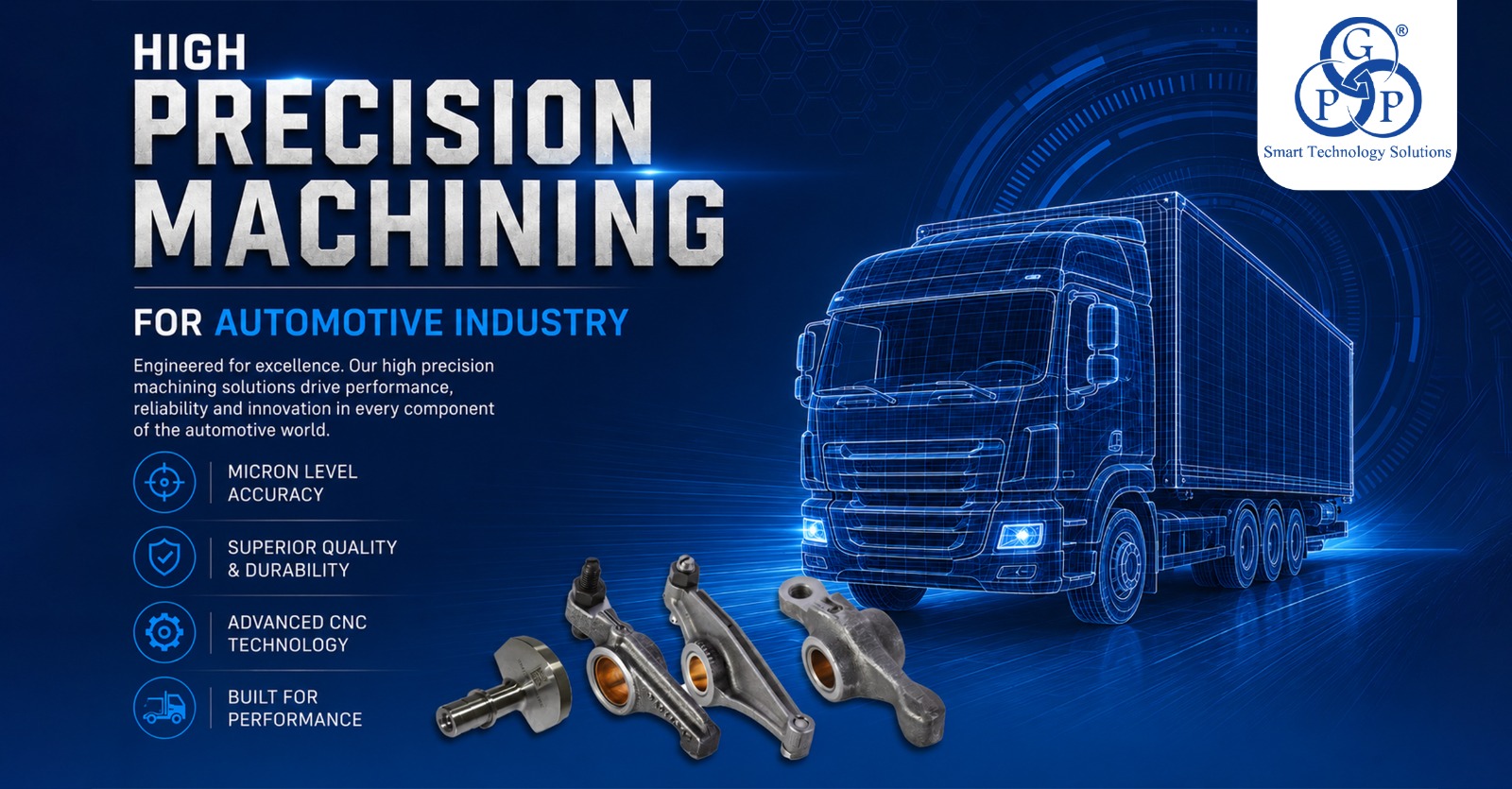
What is high precision machining for the automotive industry?
High precision machining is a computer-controlled manufacturing process used to produce automotive components with extremely high dimensional accuracy, repeatability, and surface finish. It enables the production of EV powertrain parts, engine components, chassis parts, and safety-critical assemblies with tolerances measured in microns.
What is the difference between CNC and traditional manufacturing?
CNC machining uses computer-controlled tools to precisely remove material, achieving tolerances of ±0.005mm. Traditional manufacturing includes casting, forging, and stamping, which typically achieve ±0.10mm to ±0.50mm tolerances. The choice depends on component requirements, volume, and cost considerations.
Which is better for automotive components—CNC or traditional?
It depends on the component. CNC is better for complex, high-precision parts like EV motor components and ADAS sensor housings. Traditional methods are better for high-volume, simple-geometry parts like engine blocks and structural components. Many manufacturers use hybrid approaches combining both methods.
Is CNC machining more expensive than traditional manufacturing?
CNC machining has lower setup costs but higher per-part costs at very high volumes. Traditional manufacturing requires significant tooling investment but offers lower per-part costs at scale. For low to medium volumes, CNC machining is often more cost-effective. For high volumes, traditional methods become more economical.
| Trust Signal | Details |
|---|---|
| Updated for 2026 | Latest industry data and manufacturing practices |
| Industry Expertise | Based on ACMA, SIAM, and ARAI industry reports |
| Technical Authority | ISO, IATF, and DSIR recognized standards |
| Real OEM Experience | Based on actual Tier-1 supplier requirements |
| Review Methodology | Transparent rating system explained below |
This guide is based on industry reports from the Automotive Component Manufacturers Association of India (ACMA) and Society of Indian Automobile Manufacturers (SIAM), verified manufacturing data, and service evaluations from leading precision automotive component manufacturers in India. Each manufacturing method has been assessed based on precision, cost, scalability, and application suitability.
Last Reviewed: July 2026
| Factor | Weight |
|---|---|
| Precision & Accuracy | 25% |
| Complexity & Design Freedom | 20% |
| Production Volume & Cost | 20% |
| Material Versatility | 10% |
| Lead Time & Time-to-Market | 10% |
| Automation Potential | 5% |
| Repeatability | 10% |
These ratings are based on publicly available industry data, manufacturing evaluations, and industry standards. Scores may vary over time as technologies evolve and new methods become available.
The automotive industry in 2026 faces a fundamental question: Which manufacturing method delivers the best results for precision components? As vehicles become more complex, electric, and autonomous, the demands on component precision have never been higher. The choice between CNC machining and traditional manufacturing methods can significantly impact product quality, cost, and time-to-market.
India has emerged as a global powerhouse in automotive component manufacturing. According to the Automotive Component Manufacturers Association of India (ACMA), the industry recorded a turnover of 7.60 lakh crore (US$85.9 billion) in FY2025-26, registering a year-on-year growth of 12.7%. The industry has more than doubled in size over the past five years at a compound annual growth rate (CAGR) of 17%.
The Society of Indian Automobile Manufacturers (SIAM) reports that passenger vehicle sales in India reached record levels in FY25, supporting growth in component manufacturing. According to Goldman Sachs, India's precision machining and auto parts industry is expected to grow at a 10% CAGR between FY26 and FY30.
This comprehensive guide compares CNC machining and traditional manufacturing methods to help you make the right choice for your automotive component needs.
CNC (Computer Numerical Control) machining is a subtractive manufacturing process where computer-controlled machine tools remove material from a solid block or workpiece to create the desired shape. The process begins with a CAD model, which is converted into a CAM program that guides the machine's movements.
CNC machining offers remarkable precision, with tolerances reaching ±0.005mm or better. It can produce complex geometries that would be impossible or prohibitively expensive with traditional methods. Modern CNC machines include 5-axis milling centers, CNC turning centers, Swiss-type lathes, and precision grinding machines.
Key CNC machining processes used in automotive manufacturing:
Engineering Insight: Over three decades of manufacturing experience have shown that machining accuracy is influenced not only by CNC programming but also by tooling condition, machine calibration, thermal stability, fixture design, and inspection methodology. These production variables significantly affect dimensional consistency during high-volume manufacturing.
Traditional manufacturing encompasses processes that have been used in automotive production for over a century. These methods typically involve shaping material through casting, forging, stamping, or manual machining.
Common traditional manufacturing processes:
Traditional methods excel at high-volume production of relatively simple geometries. They often have lower per-part costs at scale and can produce parts with excellent mechanical properties, particularly in the case of forging.
CNC machining is generally preferred for high-precision automotive components because it offers tighter tolerances, higher repeatability, and easier design changes. Traditional methods like casting and forging remain suitable for high-volume structural components where tooling costs are justified.
| Aspect | CNC Machining | Traditional Manufacturing |
|---|---|---|
| Tolerances | ±0.005mm to ±0.01mm | ±0.10mm to ±0.50mm |
| Complexity | Complex 5-axis geometries | Simple to moderate geometries |
| Setup Time | Moderate to high | High (tooling/molds required) |
| Per-Part Cost (Low Volume) | Lower | Higher |
| Per-Part Cost (High Volume) | Higher | Lower |
| Lead Time (Prototypes) | Days to weeks | Weeks to months |
| Material Waste | 10-30% | 5-15% (casting/forging) |
| Repeatability | Exceptional | Good to excellent |
| Design Changes | Easy to implement | Difficult and expensive |
| Surface Finish | Superior (Ra≤0.2μm) | Standard to good |
| Automation Potential | High | Limited to moderate |
The automotive industry's shift toward electrification and autonomous driving has dramatically increased precision requirements. Electric vehicles demand components manufactured to tighter tolerances than traditional internal combustion engine vehicles.
CNC machining can achieve tolerances as tight as ±0.005mm. This level of precision is essential for:
CNC machined automotive parts have been shown to have significantly longer fatigue resistance lifespan than stamped parts, with minimal deformation risk even under high-frequency working conditions.
Traditional manufacturing methods like casting and forging typically achieve tolerances of ±0.10mm to ±0.50mm. This level of precision is sufficient for many automotive components:
CNC machining can produce virtually any geometry imaginable, including complex 5-axis shapes, undercuts, and internal features. Traditional methods are limited by tooling constraints and often require multiple operations or secondary machining. For components with complex geometries, CNC machining is the preferred choice.
One of the greatest advantages of CNC machining is its design freedom. Modern 5-axis CNC machines can produce complex geometries that would be impossible with traditional methods.
Complex features achievable with CNC machining:
CNC machining is significantly more flexible than traditional stamping for complex automotive parts.
Traditional manufacturing methods excel at producing relatively simple geometries at high volumes. However, they have significant limitations:
Complex parts often require multiple traditional operations or secondary machining. For example, a cast engine block typically requires additional CNC machining for critical surfaces and features.
CNC machining is more cost-effective for low to medium volumes, prototyping, and complex parts. Traditional manufacturing offers lower per-part costs at very high volumes (50,000+ units) but requires significant upfront tooling investment. The most cost-effective approach depends on your specific production requirements.
CNC machining offers several cost advantages:
A study of an automotive parts factory demonstrated significant reductions in production time and operational costs after implementing CNC technology.
CNC machining also reduces material waste through computer-optimized toolpaths. Traditional machining methods often generate significant material waste, while CNC machining uses CAD software to optimize material usage.
Traditional manufacturing becomes cost-effective at very high volumes:
However, traditional methods require significant upfront investment:
CNC machining can work with virtually any material—aluminium, steel, titanium, composites, and more. Traditional methods like casting and forging are limited to specific materials but can produce parts with superior mechanical properties. Material selection should consider both performance requirements and manufacturing feasibility.
CNC machining offers exceptional material flexibility:
This versatility makes CNC machining ideal for prototyping and production across diverse material requirements.
Traditional methods offer advantages for specific materials:
However, traditional methods have limitations:
CNC machining offers significantly faster lead times for prototyping and low-volume production—days to weeks versus weeks to months for traditional tooling. This makes CNC machining the preferred choice for product development and rapid iteration. For high-volume production, traditional methods justify longer lead times through lower per-part costs.
CNC machining enables rapid product development:
This speed is particularly valuable in the automotive industry, where time-to-market is critical.
Traditional manufacturing requires significant lead time:
For high-volume production, these lead times are justified by lower per-part costs. For prototyping and low-volume production, the time and cost of traditional tooling are often prohibitive.
Many manufacturers now use hybrid approaches combining traditional methods (casting, forging) for near-net shape production followed by CNC machining for critical surfaces and features. This approach leverages the cost advantages of traditional methods with the precision of CNC machining, offering optimal results for many automotive components.
Hybrid manufacturing combines traditional and CNC processes to achieve optimal results:
This approach is widely used for:
CNC machining is ideal for complex, high-precision components including EV motor parts, ADAS sensor housings, engine components, and prototypes. Traditional methods are better for high-volume, simple-geometry parts like structural components, large castings, and body panels. Hybrid approaches are optimal for many critical components.
| Component Type | Why CNC | Typical Tolerances |
|---|---|---|
| EV motor components | Tight tolerances, complex geometries | ±0.005mm |
| ADAS sensor housings | Micron-level accuracy, surface finish Ra≤0.2μm | ±0.005mm |
| Fuel injectors | Precise flow control, tight tolerances | ±0.005mm |
| Transmission components | Precise fits, complex geometries | ±0.01mm |
| Prototypes | Rapid iteration, no tooling required | ±0.01mm |
| Turbocharger components | High precision, complex shapes | ±0.005mm |
| Component Type | Why Traditional | Typical Tolerances |
|---|---|---|
| Engine blocks | High volume, large size | ±0.10mm |
| Transmission cases | High volume, complex but forgiving | ±0.10mm |
| Suspension arms | High volume, structural requirements | ±0.25mm |
| Body panels | High volume, sheet metal | ±0.50mm |
| Large brackets | High volume, simple geometry | ±0.25mm |
| Wheels | High volume, cast or forged | ±0.10mm |
| Component Type | Traditional Process | CNC Process |
|---|---|---|
| Engine blocks | Casting | Cylinder boring, deck surfacing |
| Connecting rods | Forging | Bearing surfaces, bolt holes |
| Crankshafts | Forging or casting | Bearing journals, oil passages |
| EV motor housings | Casting | Bearing fits, mounting surfaces |
| Transmission housings | Casting | Shaft bores, mounting surfaces |
India's auto component industry recorded US$85.9 billion turnover in FY26, up 12.7%, and has more than doubled in size over five years at a 17% CAGR. The precision machining and auto parts industry is projected to grow at 10% CAGR through FY30, driven by EV adoption, export demand, and government initiatives.
The Indian automotive component industry has demonstrated remarkable growth. According to the Automotive Component Manufacturers Association of India (ACMA), the industry recorded a turnover of INR 7.60 lakh crore (US$85.9 billion) in FY2025-26, registering a year-on-year growth of 12.7%. The industry has more than doubled in size over the past five years at a compound annual growth rate (CAGR) of 17%.
Key growth segments include:
The Society of Indian Automobile Manufacturers (SIAM) reports that passenger vehicle sales in India reached record levels in FY25, supporting growth in component manufacturing.
According to Goldman Sachs, India's precision machining and auto parts industry is expected to grow at a 10% CAGR between FY26 and FY30, driven by diversification into semiconductors, defence, aerospace, electric vehicles, and data centres.
The Automotive Research Association of India (ARAI) provides critical expertise in R&D, testing, certification, and homologation, helping Indian manufacturers meet global standards.
Choosing CNC for very high-volume simple parts – CNC machining is not cost-effective for millions of simple parts. Stamping or casting is often better.
Ignoring tooling costs – Traditional methods require significant upfront investment. Calculate total cost of ownership.
Overlooking tolerance requirements – Specify tolerances clearly. Over-specifying increases costs unnecessarily.
Selecting suppliers without IATF 16949 certification – This certification is essential for automotive quality management.
Ignoring PPAP/APQP requirements – These quality planning processes are required by most OEMs.
Not planning for scalability – Ensure your manufacturing partner can handle volume increases.
Skipping dimensional validation – First article inspection and CMM verification are critical.
Choosing a supplier without EV experience – EV components require specialised manufacturing capabilities.
The automotive industry's shift toward electrification and autonomous driving has fundamentally changed manufacturing requirements. Buyers now prioritise EV and ADAS machining expertise, advanced CNC capabilities, and supply chain resilience. Manufacturers with in-house R&D, DSIR recognition, and experience supplying global OEMs are better positioned to meet evolving industry requirements.
During precision machining, thermal expansion, tool wear, and machine vibration are continuously monitored because even micron-level deviations can affect assembly performance in modern EV platforms.
The Automotive Research Association of India (ARAI) provides critical expertise in R&D, testing, certification, and homologation, helping Indian manufacturers meet global standards. The International Organization for Standardization (ISO) sets the global standards that ensure quality and consistency across the industry.
| Project Type | Recommended Method | Why |
|---|---|---|
| EV Motor Housing | CNC Machining | Tight tolerances, complex geometry |
| High Volume Brackets | Stamping/Traditional | Cost-effective at scale |
| Crankshaft | Forging + CNC | Material properties + precision |
| ADAS Sensor Housing | CNC Machining | Micron-level accuracy needed |
| Engine Block | Casting + CNC | Cost optimization with precision |
| Prototypes | CNC Machining | No tooling, rapid turnaround |
| Connecting Rods | Forging + CNC | Strength + precision bearing surfaces |
| Body Panels | Stamping | High-volume sheet metal |
Precision engineering specialists with practical experience in automotive component manufacturing, CNC machining, casting, forging, and quality control systems. This content is reviewed periodically to reflect current manufacturing practices and industry standards.
5-axis CNC machining uses computer-controlled tools that move along five axes simultaneously, enabling the production of highly complex geometries in a single setup. It is ideal for automotive components with undercuts, angled surfaces, and intricate internal features that would require multiple setups with conventional machining.
CMM (Coordinate Measuring Machine) inspection uses a precision probe to measure the dimensional accuracy of machined components. It verifies that parts meet specified tolerances, ensuring quality and consistency. CMM inspection is essential for automotive components where even micron-level deviations can affect performance.
PPAP (Production Part Approval Process) is a standardized quality planning process required by automotive OEMs. It ensures that manufacturers can produce components that meet all specifications and quality requirements before full production begins. PPAP includes dimensional inspection, material testing, and process capability studies.
APQP (Advanced Product Quality Planning) is a structured process for developing new automotive components. It ensures that quality is built into the product and process from the beginning, reducing the risk of defects and production delays. APQP includes planning, design, process validation, and continuous improvement.
IATF 16949 is the global quality management standard for the automotive industry. It combines requirements from major OEMs and focuses on continual improvement, defect prevention, and reduction of variation in the supply chain. Certification demonstrates a manufacturer's commitment to quality and compliance.
EV motor housings are typically manufactured using a hybrid approach—casting for near-net shape production followed by CNC machining for critical features like bearing fits, mounting surfaces, and cooling channels. This approach balances cost efficiency with the precision required for electric vehicle applications.
GD&T (Geometric Dimensioning and Tolerancing) is a system for defining and communicating engineering tolerances. It ensures that machined components meet functional requirements, enabling consistent assembly and reliable performance in automotive applications.
Traditional methods like casting and forging typically cannot achieve CNC-level precision (±0.005mm). However, hybrid approaches use traditional methods for near-net shape production followed by CNC machining for critical surfaces, achieving the precision of CNC with the cost advantages of traditional methods.
EV motor components, ADAS sensor housings, fuel injectors, transmission components, turbocharger parts, prototypes, and any component requiring tight tolerances or complex geometries. CNC machining is also ideal for components requiring superior surface finishes.
Engine blocks, transmission cases, suspension arms, body panels, large brackets, wheels, and other high-volume, relatively simple components. Traditional methods like casting and forging are also preferred when superior material properties are required.
The shift toward electric vehicles and ADAS systems demands tighter tolerances and more complex geometries. EV components require precision that traditional methods cannot achieve, making CNC machining increasingly essential.
GPP India operates five cutting-edge manufacturing facilities equipped with SPMs, CNC and VMC Machining Centers, automated forging and casting lines, and advanced heat treatment systems. The company offers comprehensive solutions including precision castings, precision forgings, and EV powertrain systems.
Selecting the right manufacturing process starts with understanding the component's function, required tolerance, production volume, material, and lifecycle expectations. While CNC machining offers unmatched precision for advanced automotive and EV applications, casting and forging remain essential for high-volume manufacturing. Many OEMs achieve the best balance through hybrid manufacturing, combining traditional processes with precision CNC finishing.
Since 1988, GPP India has been a trusted partner in precision engineering, offering comprehensive solutions for valve train components, chassis components, precision castings and forgings, and EV powertrain systems. With five cutting-edge manufacturing facilities, world-class quality systems, DSIR-recognised R&D, and a commitment to zero-defect manufacturing, GPP delivers the precision and reliability that modern vehicles demand.
Ready to discuss your precision component requirements? Fast turnaround, world-class quality, and trusted service across India make GPP India your ideal precision manufacturing partner. Contact GPP India today to experience premium precision engineering services.