

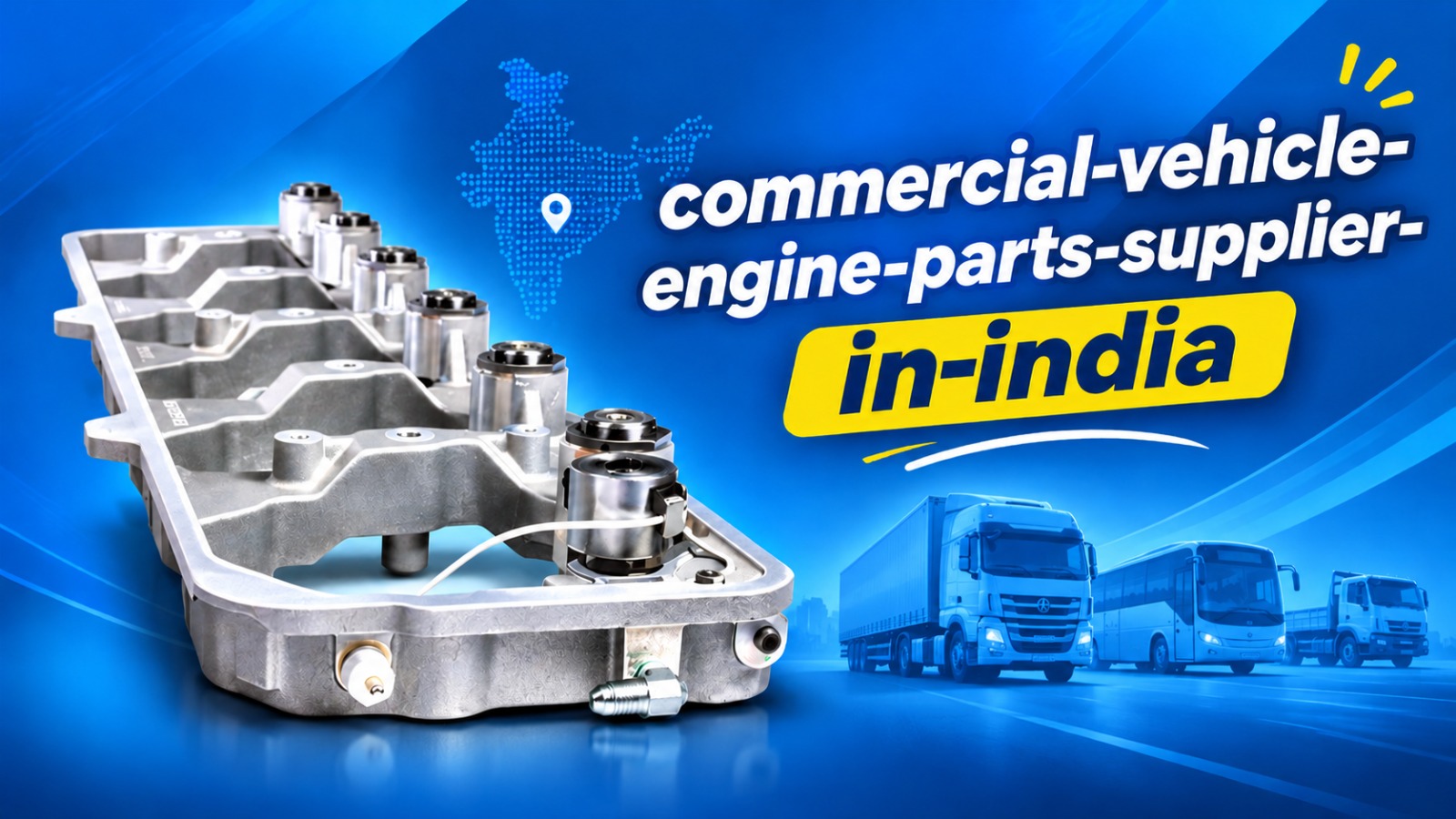
What are commercial vehicle engine parts?
Commercial vehicle engine parts are the components used in engines of trucks, buses, tractors, construction machines and generator sets. They include valve train parts, castings, forgings, springs, shafts, pins and hydraulic parts.
How do I choose a commercial vehicle engine parts supplier in India?
Check process depth, quality records, delivery reliability and the ability to work from your drawing. Strong suppliers can explain how each part is made, heat treated and inspected.
Who supplies commercial vehicle engine parts in bulk?
GPP India manufactures commercial vehicle engine parts and precision machined components, with bulk supply and Pan India delivery.
Commercial engines work hard. They run long hours, carry heavy loads and face dust, heat and rough roads. The parts inside them must be built for that kind of duty, not just for a good first impression.
Buying commercial vehicle engine parts is therefore not only about finding a source. It is about finding a partner who understands material, heat treatment, accuracy and delivery. This guide walks through the main part families, the processes behind them and the questions that help you pick a reliable commercial vehicle engine parts supplier in India.
| Family | Examples | Role |
|---|---|---|
| Valve train parts | Push rods, rocker shaft assemblies, tappets, valve bridges | Control valve opening and closing |
| Forged parts | Precision forgings | High strength under shock and fatigue |
| Cast parts | Precision castings | Complex shapes and housings |
| Shafts and pins | Hardened and ground shafts | Pivot and locating functions |
| Springs | Engineering springs | Return force and vibration control |
| Fuel system parts | Injector clamps | Hold injectors steady |
| Hydraulic parts | Hydraulic mechanism components | Smooth valve actuation and control |
| Chassis parts | U-bolts | Clamp axles and springs |
Each of these families has its own failure modes, and a good supplier understands them rather than treating every part as a generic metal piece.
A supplier that forges, heat treats, grinds and machines commercial vehicle engine parts in house has fewer hand-offs. Every hand-off is a chance for delay or error.
Look for measurement tools, a dedicated inspection room, material testing and traceability. Written records matter as much as the equipment.
Can the supplier work from your drawing, or only from a catalogue? Custom precision machined components need engineering discussion.
Volume parts need steady supply. Ask about monthly capacity, lead time and how the supplier handles peaks.
Clear, quick and honest replies are part of quality. Slow answers before an order often mean slow answers after it.
| Process | What It Does |
|---|---|
| Hot forging | Shapes steel with strong grain flow |
| Foundry casting | Creates complex shapes |
| Projection welding | Joins parts with strong, repeatable welds |
| Induction hardening | Hardens wear surfaces |
| Gas carburising | Builds a hard case on low carbon steel |
| Hardening and tempering | Balances strength and toughness |
| Centreless grinding | Gives round, accurate shafts and pins |
| Super finishing | Creates smooth contact surfaces |
| CNC machining | Achieves tight tolerance |
| Spring coiling and shot peening | Builds fatigue resistant springs |
GPP India has these processes available across three plants spread over more than 29,000 square metres, so many commercial vehicle engine parts can be made within one group.
Quality management references such as ISO 9001 show how reliable suppliers control records and corrective action. The Bureau of Indian Standards and the Automotive Component Manufacturers Association of India are useful sources for Indian buyers, and the India Brand Equity Foundation automobile sector page gives wider industry context.
Even careful buyers slip into a few habits that cause trouble later.
Avoiding these mistakes protects both your production schedule and your brand.
A good supply plan is built before the first order. Share your forecast, expected peaks and any seasonal changes with the supplier, so capacity can be reserved. Agree on sample approval steps, inspection reports for each lot and how deviations will be handled. For commercial vehicle engine parts used in volume programmes, consider a joint review every few months to look at quality trends and delivery performance. Regular reviews keep small issues from growing and build trust on both sides.
| Question | What a Good Answer Shows |
|---|---|
| Which processes are done in house? | Control over quality and lead time |
| How is heat treatment verified? | Consistent hardness and strength |
| What inspection records do you share? | Transparency |
| How do you handle a quality complaint? | Corrective action discipline |
| What is your monthly capacity? | Ability to scale with you |
| Can you work from our drawing? | Engineering support |
The transport sector is changing, and many manufacturers are planning for electric drivelines as well as conventional engines. A supplier who understands precision machining, heat treatment and tight tolerance work is well placed to support both. GPP India also lists an E-Powertrain area on its website for buyers who want to explore this direction.
GPP India is the brand name of Ghaziabad Precision Products Pvt. Ltd., a manufacturer of commercial vehicle engine parts and custom precision machined components. It offers Valve Train Components, Casting Products, Chassis Components and Engineering Springs.
Here is what that means for you:
Reach the team through the contact page.
Choosing a supplier of commercial vehicle engine parts is a long-term decision. The right partner controls the process, shares records openly and delivers on time, batch after batch. When you compare options, look past the catalogue and ask how each part is formed, hardened, finished and inspected. That is where quality is truly decided.
They are components used in engines of trucks, buses, tractors, construction machines and generator sets, such as valve train parts, forgings and castings.
Check process depth, inspection records, drawing capability, capacity and delivery reliability.
Fewer outside hand-offs mean better control over quality, lead time and traceability.
Hot forging, casting, heat treatment, grinding, super finishing and CNC machining are among the most common.
Yes. Capable suppliers produce parts to your drawing, with the required material, hardness and tolerance.
Ask for dimensional reports, hardness results, material certificates and lot traceability.
Many do. Confirm capacity, lead time and packing so deliveries stay steady.
They are the parts that open and close the engine valves, including tappets, push rods, rocker shaft assemblies and valve bridges.
Yes. GPP India offers bulk supply with Pan India delivery.
Use the contact page on the GPP India website and share your drawing, material and volume details.