

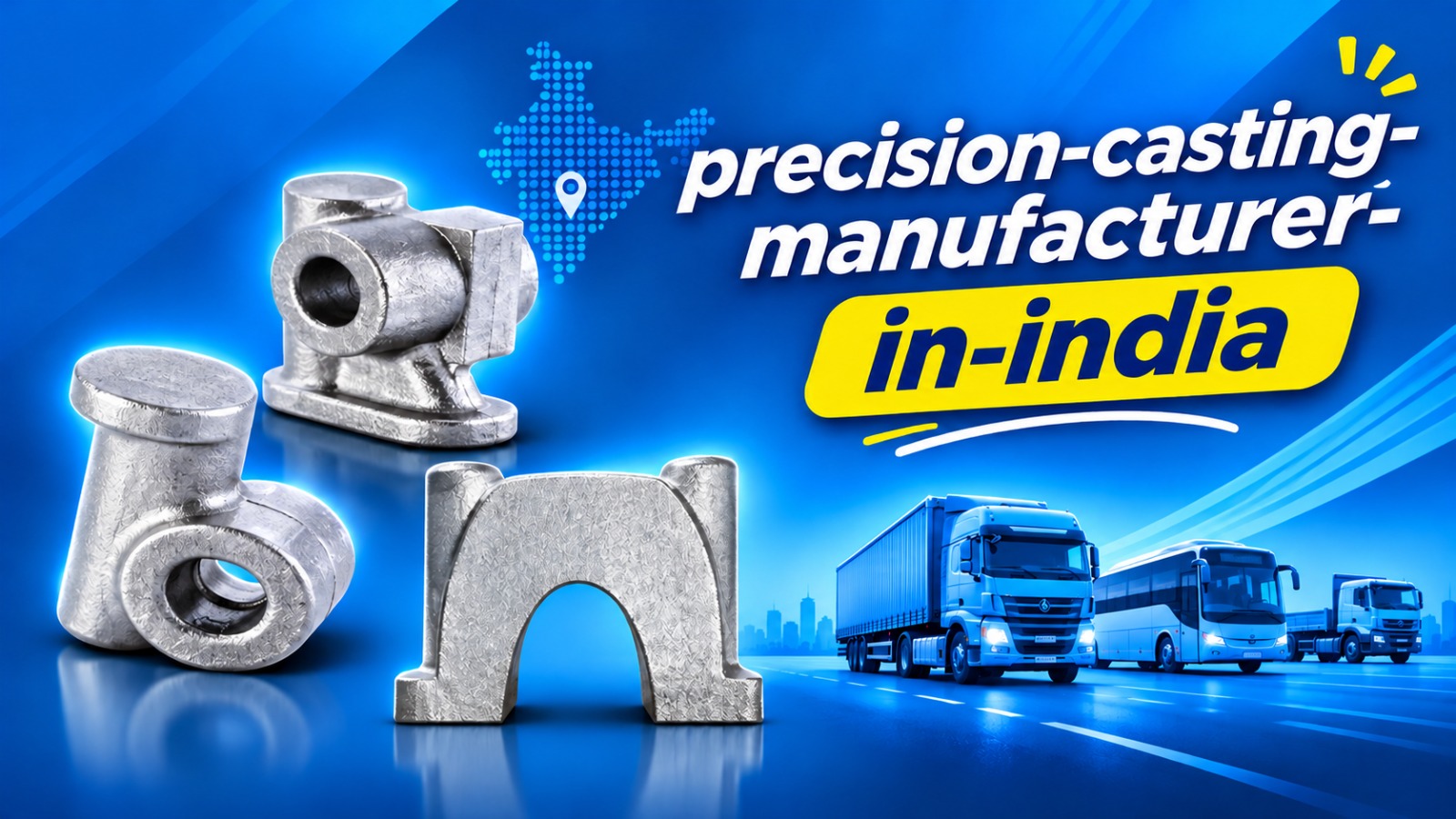
What is precision casting?
Precision casting is a metal forming method where molten metal is poured into a carefully made mould so the part comes out close to its final shape. It reduces machining work and gives repeatable dimensions across large batches.
How do I choose a precision casting manufacturer in India?
Check pattern and mould control, melting and chemistry control, inspection methods and machining capability. A good partner can explain how it prevents porosity, shrinkage and size variation.
Who offers precision casting for commercial vehicle engines?
GPP India offers precision castings supported by an in-house foundry, machining and inspection, with Pan India delivery.
Many parts inside a truck, tractor or generator set begin life as liquid metal. Casting lets a designer create complex shapes, internal passages and thick or thin sections that would be hard or wasteful to cut from solid bar.
But casting is also unforgiving. A tiny air pocket or a poor mould can ruin a batch. That is why precision casting matters: it is the careful, controlled version of casting, where the pattern, the mould, the metal and the cooling are all managed to hit tight targets. This guide explains the process in simple terms and tells you what to look for in a precision casting manufacturer in India.
In basic casting, metal is poured into a cavity and left to cool. In precision casting, every step is tightened up:
The result is a part that needs less machining, wastes less metal and arrives with more consistent quality.
| Application Area | Typical Cast Parts |
|---|---|
| Engines | Rocker arms, brackets, housings and covers |
| Chassis | Brackets, hubs and support parts |
| Power generation | Engine and alternator components |
| Agriculture and construction machinery | Linkage and housing parts |
| Hydraulics | Valve bodies and manifolds |
Cast shapes often connect with machined parts such as a rocker shaft assembly or a valve bridge, so it is common for a buyer to need casting and machining from one source.
The pattern is a model of the part, slightly enlarged to allow for shrinkage as the metal cools. The mould is formed around it, with channels (gating) that guide metal into every corner.
The metal is melted and tested. A quick chemical check confirms that carbon and alloy levels are within limits before any pouring starts.
Molten metal is poured at a controlled temperature. As it cools, it solidifies from the walls inward, and good gating design feeds extra metal to areas that would otherwise shrink.
The casting is removed from the mould, and gates, risers and sand or ceramic residue are removed.
Many castings are heat treated to relieve stress or reach target hardness and strength.
Critical faces and bores are machined to final size, and the finished casting is inspected.
GPP India runs an in-house foundry beside precision machining and heat treatment, so a precision casting can move from metal to finished part without leaving the group.
| Defect | Cause | Prevention |
|---|---|---|
| Porosity (tiny gas holes) | Trapped gas or moisture | Dry materials, good venting, controlled pouring |
| Shrinkage cavity | Metal contracts without feed | Proper risers and gating design |
| Cold shut | Metal streams meet too cool | Correct pouring temperature and speed |
| Sand inclusion | Loose mould material | Clean moulds and careful handling |
| Dimensional error | Wrong pattern allowance | Accurate pattern and regular checks |
| Cracks | Uneven cooling stress | Controlled cooling and stress relief |
Good foundries talk about these defects openly. If a supplier cannot explain how it prevents them, treat that as a warning sign.
For reference, the American Foundry Society shares technical knowledge on casting practice, ISO 9001 describes quality management principles, and the Bureau of Indian Standards publishes Indian material standards.
A good casting starts on the drawing board, long before any metal is melted. Designers and buyers can help the foundry deliver better parts by following a few simple rules.
Sharing these details at the start shortens trial cycles and brings the first lot closer to the final drawing.
| Factor | Precision Casting | Forging |
|---|---|---|
| Shape complexity | Very complex shapes possible | Simpler to moderate shapes |
| Internal passages | Possible with cores | Not practical |
| Strength | Good, depends on process | Excellent grain flow, high fatigue strength |
| Best for | Housings, brackets, intricate parts | Highly stressed parts |
The right answer depends on the load and shape. Many assemblies use both, which is why a supplier with casting and precision forging capability is useful.
GPP India is the brand name of Ghaziabad Precision Products Pvt. Ltd. The company runs three production plants spread across more than 29,000 square metres, with an in-house foundry, hot forging, heat treatment, grinding and CNC precision machining.
Buyers gain:
See the wider range on the products page.
Send your requirement through the contact page.
Casting can also be resourceful. Near-net-shape parts need less machining, so less metal ends up as chips. Scrap and runners from the foundry can often be remelted, which reduces waste. When you compare suppliers, ask how they handle scrap, energy use and sand or mould material. Responsible practice here is a sign of a well-run plant and usually goes hand in hand with consistent quality.
Precision casting rewards careful planning. When the pattern is accurate, the metal is clean and cooling is controlled, the finished part machines easily and performs for years. When any link is weak, defects appear late and slow down delivery. Choose a precision casting manufacturer in India that can show its process, explain its checks and support you through machining and delivery.
It is a casting method where molten metal fills a carefully made mould, giving parts close to final shape with tight, repeatable dimensions.
It allows complex shapes, reduces machining, saves material and gives consistent quality across large batches.
Common choices include cast iron, steel and other alloys, selected according to the strength and wear needs of the part.
Casting pours liquid metal into a mould, while forging shapes solid hot metal under pressure. Forging gives higher strength, casting gives more complex shapes.
Typical defects are porosity, shrinkage, cold shuts, sand inclusions and cracks. Good process control prevents most of them.
Through visual and dimensional inspection, chemical and hardness tests, and non destructive testing for critical parts.
Yes, usually. Critical faces, holes and mating surfaces are machined to final size after casting.
Ask about pattern control, melt chemistry checks, defect prevention, inspection methods and delivery capacity.
Yes. GPP India operates an in-house foundry along with forging, machining and heat treatment facilities.
Yes. A capable foundry can produce castings to your drawing, with the required material, tolerances and testing.