

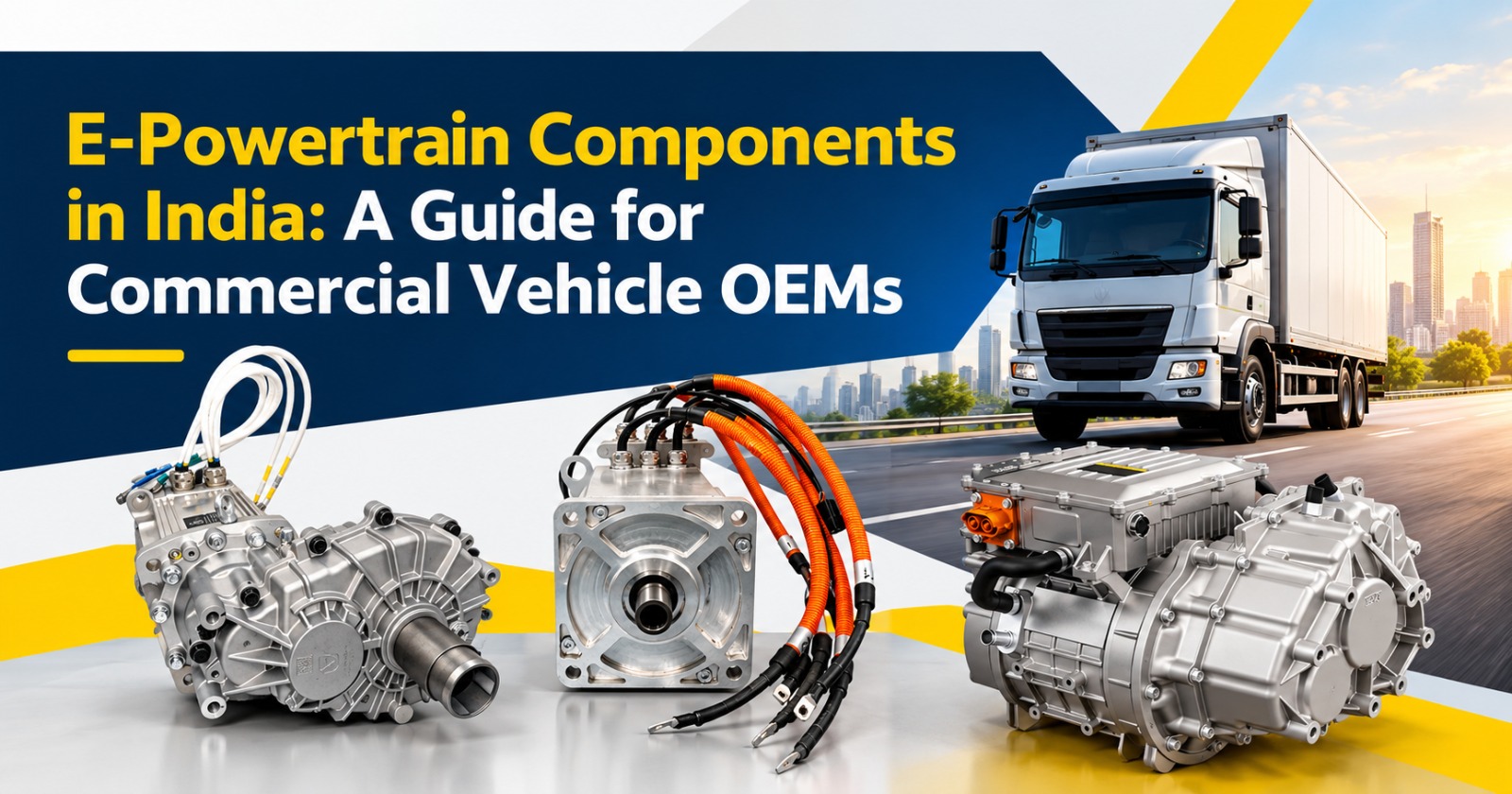
E-powertrain components form the drive system of an electric vehicle: the traction motor, power electronics, reduction gearbox, and the shafts, bearings and housings that connect them. They have fewer moving parts than an engine, but shafts, gears and housings need very tight tolerances to control noise and efficiency. OEMs should ask suppliers about machining, grinding, heat-treatment control, inspection and the route from prototype to series supply.
E-powertrain components make up the drive system of an electric vehicle. The main blocks are the traction motor, the power electronics, the reduction gearbox, and the connecting shafts, bearings and housings. Together they deliver torque to the wheels.
Compared with an engine, an electric drive has fewer moving parts, but those that remain must be very accurate. Small errors can produce noise, vibration and loss of efficiency.
For OEMs, the practical question is not only what the components are but how a supplier controls them. The sections below cover where e-drive parts differ from engine parts, what to ask a manufacturer, and how to prepare an RFQ.
| Area | Engine Parts (ICE) | E-Powertrain Components |
|---|---|---|
| Main motion parts | Pistons, valve train, crankshaft | Motor rotor shaft, reduction gears |
| Noise focus | Combustion and valve train noise | Gear whine and motor harmonics |
| Tolerance need | High | Very high on shafts, gears and housings |
| Cooling | Coolant and oil | Coolant or oil for motor and electronics |
| Heat treatment | Hardening of valve train and similar parts | Hardening of shafts and gears |
| Part count | Large | Lower |
Because of this overlap, machining quality, grinding and heat-treatment expertise carry over well from the engine world to e-powertrain components.
These parts look different from engine parts, but the manufacturing skills are closely related: machining, grinding, heat treatment and inspection all matter equally.
Motor and gearbox parts often use alloy steels that can be hardened and ground, and aluminium is common for many housings. Surface finish matters more than in many engine parts, because rough surfaces increase noise and can wear seals.
Suppliers should be able to show roughness data, runout checks and a plan for keeping results consistent across large quantities. The characteristics and records required depend on the drawing and customer specification.
| What to Ask | Why It Matters |
|---|---|
| Can the supplier hold the roundness and concentricity on shafts? | Directly affects noise and efficiency |
| Are grinding and finishing done in-house or outsourced? | Outsourced steps need separate control |
| How is heat-treatment distortion controlled and allowed for? | Distortion changes size after hardening |
| Can it scale from prototype lots to series production? | Confirms the route to volume |
| How are samples approved and tracked? | Keeps drawing revisions and approvals traceable |
| Which quality framework applies? | Frameworks such as ISO 9001 or IATF 16949 show how processes are controlled |
A clear request helps suppliers respond faster and more accurately. Include:
Engine and electric drives are expected to coexist in commercial vehicles for some time, so manufacturers can approach e-drive work step by step:
For prototype-heavy programmes, frequent technical discussion and sample review matter. A Ghaziabad manufacturing base places a supplier within reach of Delhi-NCR OEMs and engineering teams for audits and sample reviews. Buyers elsewhere in India can request virtual audits and plan dispatch in writing.
Ghaziabad Precision Products (GPP) was established in 1988 and operates five manufacturing facilities in Ghaziabad, Uttar Pradesh, with a combined footprint of approximately 37,500 sq. m. Its capabilities include forging, precision machining, heat treatment and finishing. The facilities page describes the equipment and processes in more detail. GPP supplies components to OEM and Tier-1 customers, and the clients page shows the sectors it serves.
GPP has a dedicated e-powertrain page describing its work in this area. Its precision forgings, machining and heat-treatment capabilities, and products such as shafts and pins, are relevant to the parts discussed above. Discuss specific e-drive components with GPP against your drawing.
| GPP Capability | Buyer Benefit |
|---|---|
| Established in 1988 | A long operating history to review during supplier assessment |
| Five manufacturing facilities, approx. 37,500 sq. m. | A manufacturing network whose capacity can be discussed against your volume |
| Forging, precision machining, heat treatment and finishing | Process stages relevant to shafts and structural parts |
| Dedicated e-powertrain page on the website | A starting point for e-drive discussions |
| Supplies OEM and Tier-1 customers | Experience with customer drawings and approval processes |
They are the parts of an electric drive system: the traction motor, power electronics, reduction gearbox, and the shafts, bearings and housings that connect them. Together they deliver torque from the battery-powered motor to the wheels. Housings and bearings complete the assembly.
An e-drive combines the electric motor, power electronics and transmission into one drive unit that powers the vehicle. Its layout varies by vehicle, but precision shafts, gears and housings are common to most designs. It is also called an integrated drive unit in some designs.
Yes. Motor shafts, gear shafts and housings need tight tolerances and good surface finish to keep noise low and efficiency high. Electric drives are quiet, so small dimensional errors are more noticeable than in an engine. Surface finish matters as much as dimensions.
The shift will take time and varies by vehicle segment. Diesel and gas engines are expected to stay in use alongside electric drives for some years, so manufacturers can expect demand for both engine parts and e-powertrain components. Timing depends on the vehicle segment.
Alloy steels for shafts and gears and aluminium for many housings are common choices. The grade, heat treatment and surface requirements come from the drawing, and the supplier should be able to show the records that apply to your part.
NVH means noise, vibration and harshness. Electric drives lack engine noise, so gear whine and motor harmonics are more noticeable. Concentricity, runout and surface finish on shafts and gears help keep NVH within the target. Surface finish and gear quality matter too.
Shafts and gears need hard surfaces to resist wear while keeping a tougher core to handle high torque. Heat treatment can change size and shape slightly, so allowances and grinding after hardening are planned together with machining. Ask for hardness records where specified.
It can, where it has the necessary precision machining, grinding, heat treatment and inspection capability, since many of the skills are shared. The supplier should still demonstrate capability for each part through feasibility review, samples and approval against your drawing.
GPP has an e-powertrain page on its website. To discuss a specific component, use the GPP contact page and send the drawing, material grade, tolerances and expected volumes. Volumes and schedules are agreed per requirement, and feasibility is reviewed against the drawing.
E-powertrain components reward precision: straight shafts, smooth surfaces, controlled heat treatment and clear inspection. Prepare a complete RFQ, ask suppliers how each characteristic is controlled, and approve samples before series supply.
To start a discussion, send the drawing, material grade, annual volume and technical requirements through the contact page, or review the full product range.